
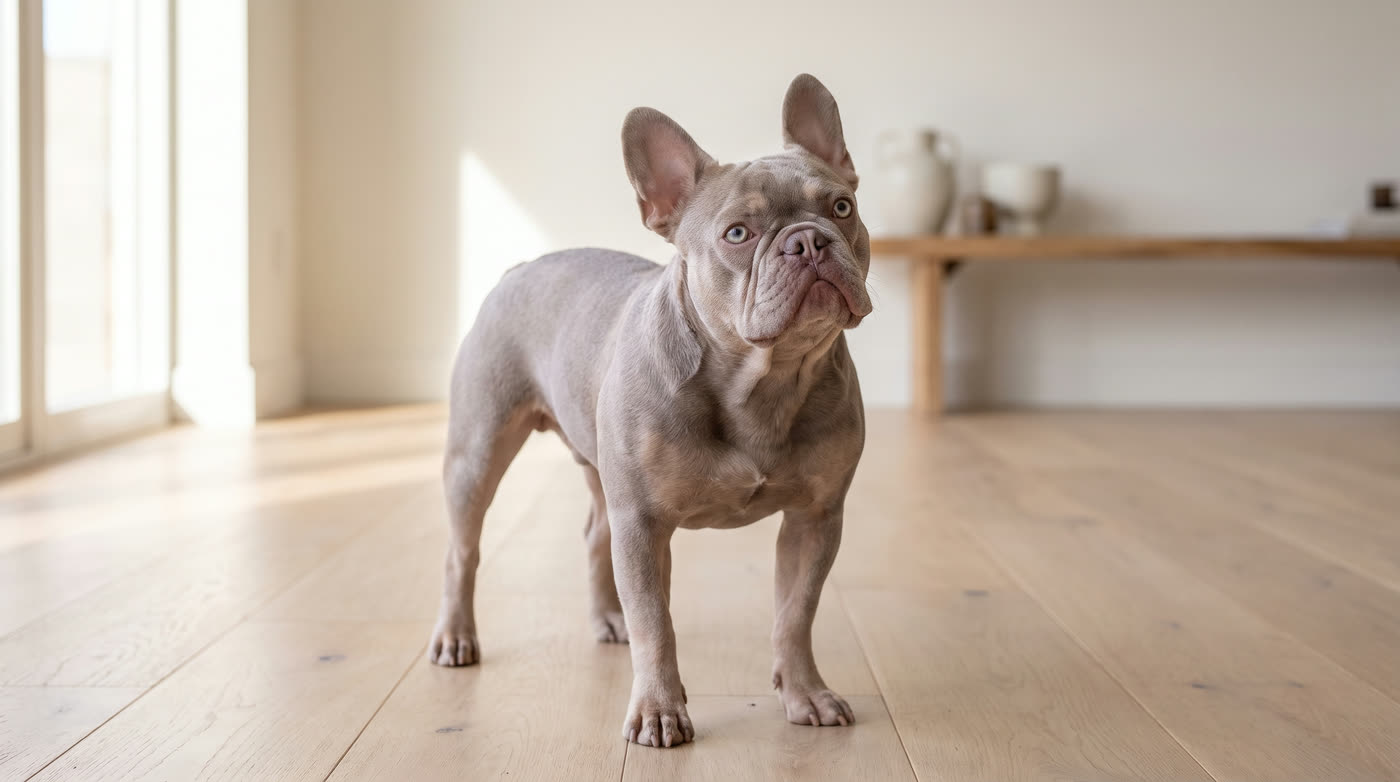
Genetics at a glance
| Genotype | d/d plus b/b or co/co |
|---|---|
| Loci involved | D locus dilution; B or Co locus brown |
| Typical UK price | £5,000 – £12,000 |
| Kennel Club | Outside the breed standard |
Lilac is what happens when a breeder combines the two premium colour genes. The dog must be homozygous for dilution and homozygous for brown, so every black pigment is first turned brown and then diluted, producing the characteristic pale mauve-grey.
Why it commands the price
Producing a lilac reliably requires both parents to carry both recessive genes, which in practice means breeding within a narrow pool of dogs selected for colour genetics. That is what makes it expensive: not that the genes are rare, but that stacking two recessives requires deliberate and restrictive selection.
The compounding problem
That restriction is the concern. When a breeding programme's primary selection criterion is colour, the criteria that actually matter for welfare — respiratory function grading, spinal conformation, patella scores, temperament — necessarily come second. The pool of dogs carrying both recessives is small, so line-breeding is common, which concentrates whatever else those lines carry.
A lilac French Bulldog therefore comes with the dilution-linked coat risk, plus the elevated probability of having been bred by someone optimising for appearance over structure. That is the meaningful risk, and it is larger than the colour itself.
What to ask
If you are buying a lilac regardless, apply more scrutiny rather than less. Ask for both parents' Respiratory Function Grading certificates, the full DNA panel, patella grades, and the coefficient of inbreeding. A breeder charging five figures can produce all of that without difficulty. One who cannot is telling you what they optimised for.
Health and cost considerations for this colour:
- Colour dilution alopecia risk from the dilution genotype
- Commonly produced by tightly line-bred programmes chasing the colour, reducing genetic diversity
- Not Kennel Club recognised
- Most likely colour to attract an insurance loading or exclusion
Buying at a colour premium? Get a written insurance quote for the specific dog before you pay a deposit — several UK insurers now load or exclude diluted coats. Our lifetime cost calculator applies the colour loading so you can see the difference over the dog's life.
What we would actually buy
Confirms dilution and cocoa status, and screens for degenerative myelopathy via SOD1 among other conditions. Useful if you are buying at a colour premium and want to verify what you actually bought.
Best for:Verifying a rare-colour purchase, or screening before breeding
Check current priceLifetime cover with per-condition limits that hold up against a single IVDD surgical episode. Compare the per-condition limit rather than the headline annual figure.
Best for:Owners insuring from the day of collection
Check current priceAs an Amazon Associate we earn from qualifying purchases.
We earn a commission if you take out a policy through this link. It does not affect what you pay.
Common questions
How much is a lilac French Bulldog in the UK?
Typically £5,000 to £12,000, and occasionally beyond for dogs with additional traits such as merle or tan points. Prices in this segment are set by fashion and fluctuate considerably.
Are lilac French Bulldogs healthy?
They carry the dilution-linked risk of colour dilution alopecia. The larger concern is indirect: producing lilac requires narrow, colour-led selection, and breeding programmes optimising for colour tend to deprioritise respiratory grading and structural screening. Judge the breeder's testing, not the colour.
What is the difference between lilac and isabella?
The terms are used almost interchangeably in the UK market. Both describe a dog that is both diluted and brown. Some breeders reserve 'isabella' for a specific tone or for dogs carrying particular allele combinations, but there is no consistent standard, and the distinction is largely a marketing one.
Related reading
Colour genetics summarised for buyers. If you are planning a mating, DNA test both parents through an accredited laboratory rather than relying on appearance.