
Home › Tools › Colour genetics
French Bulldog colour genetics
Answer seven questions in plain English and see the actual dog, photographed. Every colour in this breed comes from seven switches, two of them carry a health consequence, and the pigment card shows the one thing photographs argue about: whether the nose matches the coat.
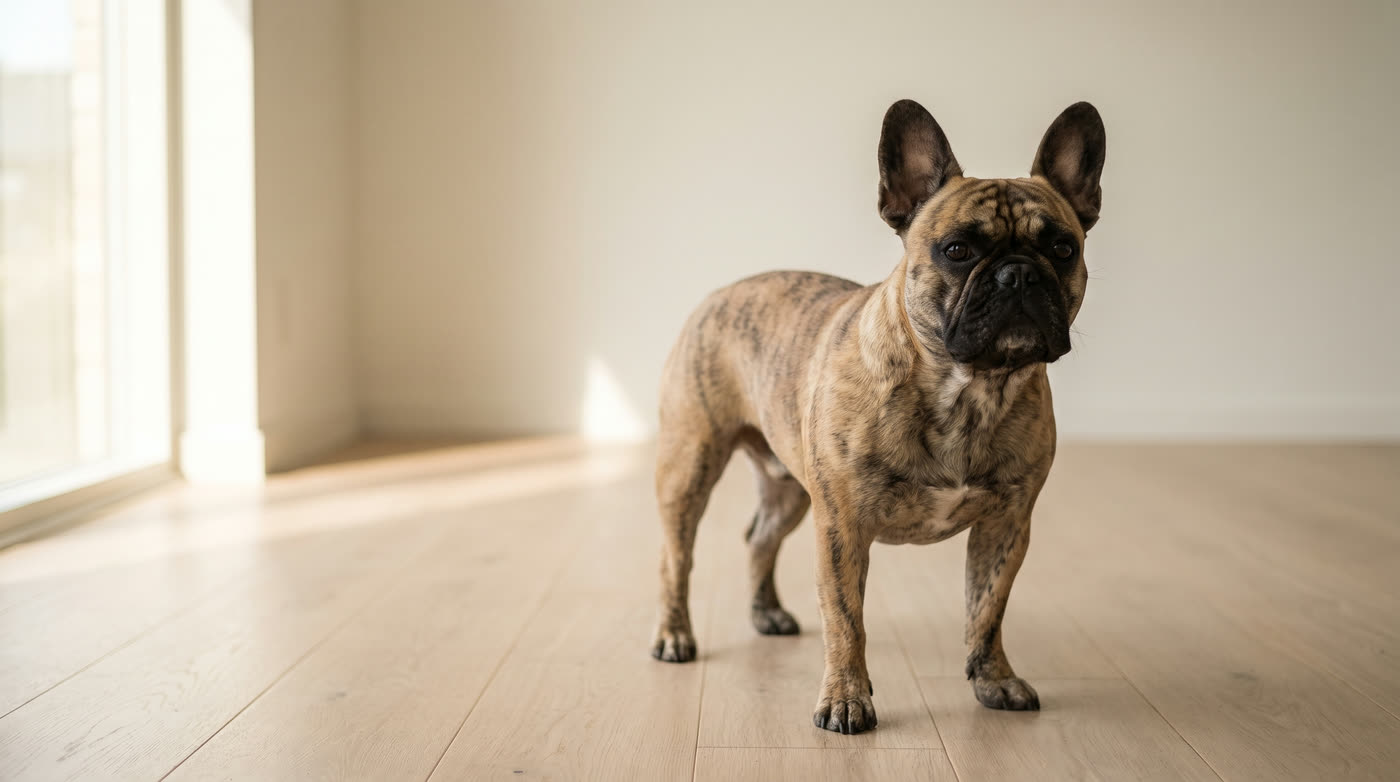
No photograph for this combination.
We only publish photographs we have verified as genetically correct, and we do not have one of this combination. The pigment card still shows exactly what it makes.
Brindle
- Kennel Club
- —
- Typical price
- —
Three things worth trying
- Turn dilution on and watch the nose. Coat colour in a photograph can be argued about; nose leather cannot. It is how you check a seller's claim in one glance.
- Set e/e for cream, then add dilution. The coat barely changes. The nose changes completely — and so does the price, and so does the health risk. That is the difference between a cream and a platinum, and it is why the two are so often confused in listings.
- Turn brindle on and then change the A locus. Nothing happens. K sits above A, which is why two brindle parents can produce a litter that looks nothing like either of them.
What this does not tell you
It shows what a genotype produces. It cannot tell you what your dog carries — a dog can carry a recessive it does not display, which is exactly how two standard-coloured parents produce a diluted puppy. Only a DNA panel answers that, and if you are paying a colour premium or planning a mating, it is worth the money.
The photographs show one dog of each colour. Real dogs vary in shade, and factors beyond these seven loci affect exactly how a coat turns out. Where a combination is rarely produced there is no photograph, and the pigment card carries it instead.
Use it on your own site
Free to embed. We ask only that the attribution link stays intact.
<iframe src="https://frenchbulldogs.co.uk/embed/colour-genetics/" width="100%" height="1200" style="border:1px solid #e2e0dc;border-radius:6px" title="French Bulldog Colour Genetics Calculator" loading="lazy"></iframe>
<p style="font-size:13px">Tool by <a href="https://frenchbulldogs.co.uk/tools/colour-genetics/">French Bulldogs UK</a></p>
Common questions
Why does the nose change colour when I select dilution?
Because dilution affects skin as well as hair. That is the single most reliable way to spot a diluted dog in a photograph: a blue has a grey nose, a lilac a pinkish-grey one, and a black-based dog a solid black one. Coat colour in a photo can be misleading; nose leather rarely is.
Why does a cream still have a black nose but a platinum does not?
The e/e genotype blocks dark pigment in the hair only, not in the skin. So a cream is genetically a black-based dog wearing a pale coat, and keeps black skin pigment. A platinum carries dilution underneath as well, which lightens the skin too. Select e/e with and without d/d and watch only the nose.
Why does changing the A locus sometimes do nothing?
Because the K locus sits above it. If the dog carries brindle (kbr), the striping overlays whatever the A locus would have produced. A brindle dog can be genetically fawn or tan-pointed and never show it — which is why two brindle parents can produce puppies that look nothing like them.
Is this the same as a DNA test?
No. This shows what a given genotype produces. A DNA panel tells you what genotype your actual dog carries, including recessives it carries but does not show. If you are buying at a colour premium or planning a mating, get the panel.
Which combinations carry a health risk?
Dilution (d/d) carries the risk of colour dilution alopecia, which is permanent and has no cure. Merle is not native to the breed and breeding two merles together risks deaf and visually impaired puppies. Extensive white carries a modest deafness risk. The tool flags each as you select it.
Related reading
A teaching model of coat colour inheritance, not a substitute for DNA testing. If you are planning a mating, test both parents through an accredited laboratory.